Piano evening with Seong-Jin Cho:
The resolution of contradictions – between discipline, perfection, and emotionality
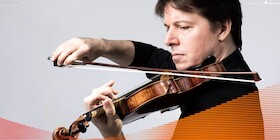
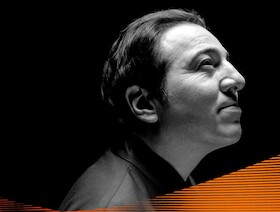
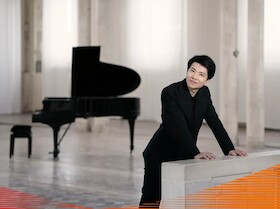
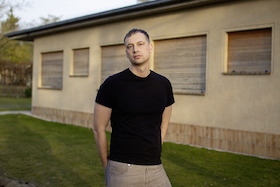
It was a deeply impressive, happy coincidence that brought the South Korean star pianist Seong-Jin Cho to a short-notice guest performance in the concert workshop of the Erlangen Music Institute at the end of January 2025: Among the many Asian groupies who gathered, word spread quickly. The other part of the audience, at the latest after this phenomenal concert, became part of the steadily growing fanbase. It was an unforgettable evening when the then 30-year-old pianist made a powerful impression with his three-hour presentation of all solo piano works by Maurice Ravel.
Since the beginning of 2016, Cho has been an exclusive artist with Deutsche Grammophon and has since looked back on a multitude of successful releases. Cho's current album is dedicated to the 150th anniversary of Ravel and includes all piano works as well as the piano concertos, recorded with the Boston Symphony Orchestra under Andris Nelsons. The project marks Cho's first complete exploration of the oeuvre of a single composer. The solo piano works were awarded the Opus Klassik in the category "Instrumentalist of the Year" in 2025.
He himself says: "I have to admit that I care a bit more for the composer than for the audience. It may sound egocentric, but I believe my task is primarily to understand the composer, his music, his language, and his emotions better and better. In the next step, I then try to convey all of that to the audience."
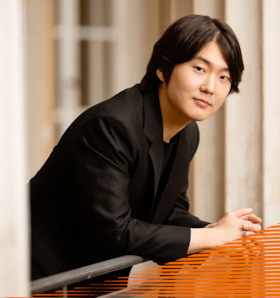
The 33-year-old is extremely humble, almost shy or – perhaps better interpreted – highly focused, solely serving the music. There are no show effects with Seong-Jin Cho. Instead, there is music that shines in many colors, presented technically perfectly.
He does not believe in perfection in music: "It does not exist. You have to sound alive. Despite the correct notes, a performance can appear totally lifeless. Notes are nothing more than tools for expression. Perfection is of no use in creating it."
In an interview, he describes himself as shy and reports of severe stage fright before his performances, which is not noticeable. Rather, he appears friendly-cool when he steps into the spotlight.
“On stage, I become a different person. Moreover, my great friend, the piano, is with me. Sometimes it doesn’t listen to me. But I can handle that. I am introverted. When I am invited to parties or dinners where more than eight people come, I’m done for. Then I feel uncomfortable... Shyness is not something bad in my eyes. The generation of my parents was overall, I believe, rather shy. In the meantime, among the younger people, it has changed. I still get incredibly nervous when I go on stage. The worst moment of my career happened when my luggage did not arrive in the USA once. I had to make an announcement. Pure horror."
Seong-Jin Cho was born in 1994 in Seoul and initially started with the violin and only "began" playing the piano at the age of six, in a country where strict rules and great competition prevail. At the age of eleven, he gave his first public recital. In 2009, he became the youngest winner in the history of the Hamamatsu International Piano Competition in Japan. In 2011, he won the third prize at the International Tchaikovsky Competition in Moscow at the age of 17. From 2012 to 2015, he studied with Michel Béroff at the Conservatoire National Supérieur de Musique et de Danse de Paris. In 2015, he drew global attention when he won the 17th International Chopin Competition in Warsaw. Since then, he has performed in the great concert halls and with the most prestigious orchestras in the world.
Today, Cho lives in Berlin. His concert activity is gigantic: he sometimes performs 20 concerts in one month across several countries in Europe and the USA, including various programs.
Practicing, when he is not traveling, takes up a comparatively modest part of his life: "I usually play for an hour before lunch. And three hours before dinner. It’s done by 8 p.m. because of the neighbors. It’s a good life."
Text: Sabine Kreimendahl

 Hallo, ich bin Maya.