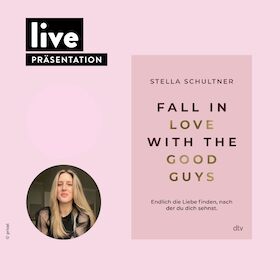
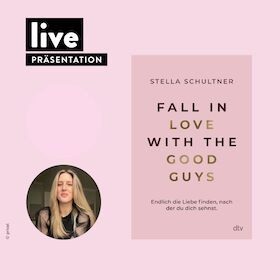
BUCHPRÄSENTATION: Fall in Love with the Good Guys
Freut euch am 12.01.2026 auf Bildungsexpertin Stella Schultner in eurer Hugendubel-Buchhandlung Stuttgart!
Endlich die Liebe finden, nach der du dich sehnst! In ihrem Buch erklärt die Gründerin der Healthy Love-Methode anhand von vielen Beispielen aus der Praxis, wie es gelingt, ungesunde Gewohnheiten zu erkennen, sie zu durchbrechen und doch noch die Good Guys zu finden, die wir alle verdient haben.
Infos über das Buch:
Den Fokus anpassen, Ängste konfrontieren, ehrlich kommunizieren - so geht Dating
Warum gibt es so viele Menschen, die immer wieder an die Falschen geraten? So lange, bis sie eine regelrechte Dating-Fatigue entwickeln, die jede Hoffnung auf eine erfüllende Beziehung im Keim erstickt? Stella Schultner hilft mit ihrem Love Coaching jeden Tag vor allem jungen Frauen dabei, ihre Liebesprogrammierung zu verstehen - die Bindungsmuster und Glaubenssätze, nach denen wir unbewusst handeln. Sie zeigt ihnen ihre blinden Flecken auf, die verhindern, dass sie dort nach Liebe suchen, wo sie tatsächlich zu finden ist.
Infos über die Autorin:
Stella Schultner hat Psychologie an der LMU München studiert und machte eine hypnotherapeutische Ausbildung im Zentrum für Autosystemhypnose. Zu den Schwerpunkten der Therapieausbildung gehörten die hypnotherapeutische Arbeit mit dem Unterbewusstsein, Traumatherapie, Diagnostik, Autosystemhypnose und diverse Methoden und Verfahren, um die menschliche Psyche tiefgehend zu verstehen, blockierende Muster aufzulösen und nachhaltige Veränderungsprozesse zu ermöglichen. Seit 2023 ist Stella Schultner Teil des Expert:innen-Teams von Parship. Im Fernsehen war sie unter anderem in Brisant (WDR), dem ZDF-Morgenmagazin und dem Pro7-Format Das Jenke Experiment zu sehen, wo sie über aktuelle Dating-Trends, Beziehungsmuster und psychologische Hintergründe sprach. Auch in der Presse ist ihre Expertise gefragt: Sie veröffentlichte Fachbeiträge in der Süddeutschen Zeitung , der Stuttgarter Zeitung , Grazia , Petra , JOLIE , Wunderweib und vielen weiteren renommierten Magazinen. Neben ihrer Arbeit als Coach und Beraterin klärt sie in ihrem Podcast IN LOVE und auf ihrem Instagram-Account @stellaschultner_psychologie regelmäßig über Beziehungen und Dating auf. Sie ist Gründerin der Healthy Love-Methode.
Jetzt Ticket sichern!

 Hallo, ich bin Maya.