Mad Songs - Englische Lieder von Liebe, Eifersucht und Wahnsinn - Ensemble musica cubicularis zu Gast in der Kirche Markau
Program: Henry Purcell, Daniel Purcell, John Blow, John Eccles, Matthew Locke, Cuthbert Hely
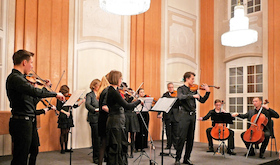
Ensemble musica cubicularis
Helena Bregar, Soprano
Sam Chapman, Theorbo
Domen Marincic, Viola da Gamba
Tomaž Sevšek, Harpsichord
In English songs about love, loss, jealousy, and madness, we recognize a similar madness as found in the characters from Shakespeare's plays such as Hamlet, Ophelia, King Lear, and Macbeth. The leaps from one extreme emotion to the next provided an extraordinary source of inspiration for poets, composers, and performers.
Since its founding in 2004, musica cubicularis has been dedicated to Early Music on historical instruments. The ensemble's repertoire includes lesser-known and yet unpublished works, including opera arias from the Attems family archive in Slovenska Bistrica, motets and spiritual dialogues from the Koper Cathedral archive, music from the Franciscan monastery in Novo Mesto, concerts from the collection of Ptuj, Renaissance music dedicated to the Khisl family members, and the repertoire once preserved in the archive of the Cathedral of Ljubljana. The ensemble performs in Slovenia, Austria, Italy, Germany, Croatia, the Czech Republic, Spain, and Switzerland. It collaborates with renowned singers and instrumentalists, including notable specialists such as Federico Guglielmo, Bojan Čičić, Alex Potter, William Dongois, María Cristina Kiehr, and Edoardo Torbianelli. At the end of 2021, musica cubicularis recorded a CD of motets and instrumental music by Isaac Posch in Sweden.
The soprano Helena Bregar, of Polish-Slovenian origin, studied at the Music Academy in Bydgoszcz and completed her studies at the Pôle Supérieur Paris Boulogne-Billancourt under Isabelle Poulenard. She has performed in operas by Mozart, Rossini, Campra, Cavalli, and Luigi Rossi. She has appeared at the Paris Philharmonie and the Cité de la Musique. She works with the ensembles Compagnie La Tempête, Flores Myrtae, Musiciens de Saint-Julien, and Vox Cantoris, and also leads her own ensemble, La Sensible. She is involved in traditional Slavic singing, also as a soloist with the group Kapela OldNova, and has an interest in alternative theater and Baroque dance.
Sam Chapman studied historical plucked instruments with Elizabeth Kenny at the Royal Academy of Music (London), where he received the Julian Bream Prize and Robert Spencer Award. In 2004, he moved to Basel to train as an Alexander Technique teacher. After receiving the Leverhulme Scholarship, he studied at the Schola Cantorum Basiliensis in the Master’s program (MA) for lute under Hopkinson Smith. In 2012, he also completed an MA in basso continuo with Jesper Christensen. He has been involved in various CD productions and has performed at outstanding Early Music festivals, such as in Wigmore Hall in London, the Konzerthaus Vienna, and the State Opera Berlin. As a continuo player, he has collaborated with the Academy for Ancient Music Berlin and the Orchestra of the Age of Enlightenment, as well as conductors like William Christie, Alessandro de Marchi, Diego Fasolis, and Rinaldo Alessandrini. For several years, he was a lecturer in lute, basso continuo, and chamber music at the University of the Arts Berlin and has been teaching at HfMDK Frankfurt since 2023.
Domen Marincic began his musical training on the cello and later studied viola da gamba in Nuremberg and with Philippe Pierlot in Trossingen. He also obtained a diploma in harpsichord under Carsten Lohff and completed a postgraduate study in basso continuo with Alberto Rinaldi. As a chamber musician, he concerts throughout Europe, Canada, the USA, China, Korea, and Vietnam. As a cellist, gambist, or harpsichordist, he has participated in about 40 CD productions for labels such as Accent, Aeolus, Arcana, BIS, Brilliant Classics, Harmonia Mundi France, Oehms Classics, and Sony/DHM. In recent years, he has directed orchestra projects in Slovenia, Finland, and Croatia; among other works, he has performed oratorios by Scarlatti, Stradella, and Pasquini, as well as the Requiem by Jean Gilles. He has given lectures or workshops at conservatories and music schools in Venice, Munich, Detmold, Bremen, Freiburg, Basel, Helsinki, Linz, Salzburg, and Vienna. From 2021 to 2025, he was a professor of historical performance practice at the Hamburg University of Music and Theater. Since October 2025, he has been serving in the same role as the successor to Reinhard Goebel at the University Mozarteum Salzburg.
Tomaž Sevšek studied organ with Zsigmond Szathmary and harpsichord with Robert Hill at the Freiburg University of Music and later continued his studies at the Eastman School of Music in Rochester (USA) with David Higgs and Arthur Haas. He performs in Slovenia, Germany, Austria, Italy, France, Spain, Croatia, and Switzerland and regularly collaborates with a number of ensembles and orchestras. He has performed on significant historical instruments, including the oldest organ in the world in Sion, Switzerland. He is also intensively engaged with the clavichord and a forgotten instrument, the French art harmonica.
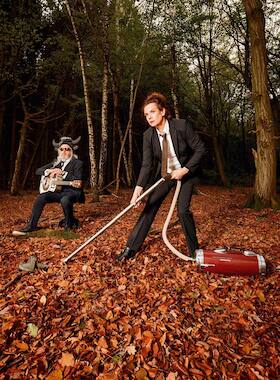
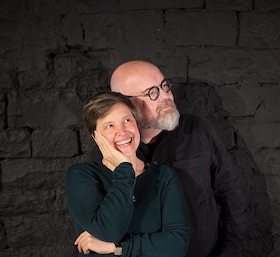
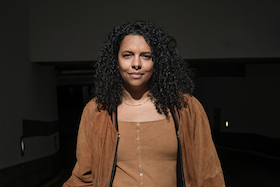
Photo (c) Philippe Denis
In cooperation with Kulturfeste in Brandenburg e.V.
Admission: 2:30 PM / Coffee and cake from 2:00 PM