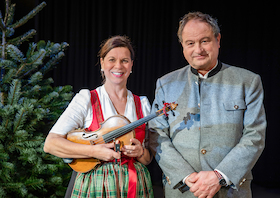
Heilige Nacht von Ludwig Thoma - Pfarrer Rainer Maria Schießler und Geschwister Siferlinger und Matthias Pürner
Heilige Nacht
Eine Weihnachtslegende nach Ludwig Thoma
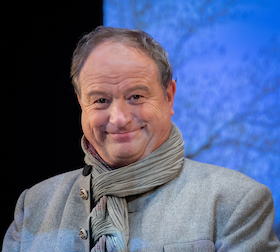
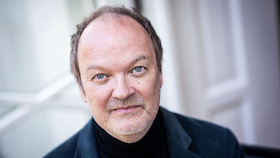
Pfarrer Rainer Maria Schießler
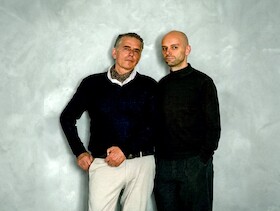
musikalisch begleitet vom Dreigsang Geschwister Siferlinger - Matthias Pürner / Ziach mit den ursprünglichen Heilige-Nacht-Gesängen von Ludwig Thoma
Spielzeit ohne Pause: ca.70 Mn.
Der große Volksdichter schrieb seine lyrisch-bayrische Weihnachtsgeschichte 1916 auf seiner
geliebten ‚Tuften‘ überm Tegernsee. Die Verse erzählen schlicht und eben deshalb zu Herzen gehend
die biblische Mär, wie sie wohl über Generationen am Heiligen Abend in den bäuerlichen Stuben zu
hören war. Erinnerungen werden wach: an eine warme Stube, an Plätzchengeruch, an die
Geborgenheit der Kinderjahre.
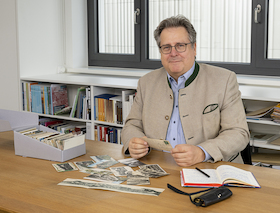
Rainer Maria Schießler
Pfarrer Rainer Maria Schießler wuchs im Ortsteil der Pfarrei "Zu den heiligen zwölf Aposteln" in München-Laim auf.
1980 schloss er sein Abitur am Wittelsbacher-Gymnasium München mit dem bayerischen Abitur ab. Von 1981 bis 1986 studierte er Theologie an der Universität München und der Universität Salzburg. 1986/1987 verbrachte er ein Pastoraljahr in
der Seelsorgeeinheit Bad Kohlgrub. Die Priesterweihe empfing er am 27. Juni 1987 in Freising. Von 1987 bis 1991 war er Kaplan der Kirche "St. Nikolaus" in Rosenheim. Von 1991 bis 1993 war er Kaplan in der Kirche "Heiligkreuz" in
München-Giesing. Seit 1993 leitet er als Pfarrer die Pfarrei St. Maximilian in München (1995 offiziell eingesetzt).
Von 2006 bis 2012 arbeitete Schießler jedes Jahr im Schottenhamel-Zelt beim Oktoberfest in München als Kellner. Er spendete sein Gehalt aus diesem Job an eine Wohltätigkeitsorganisation. [3][4] Nach einer zweijährigen Pause arbeitete er 2015 ein weiteres Mal auf dem Oktoberfest und spendete seine Einnahmen an ein vom bayerischen Komiker Christian Springer initiiertes Charity-Projekt für Syrien.
Seit 2011 verwaltet er neben der Pfarrei St. Maximilian auch die Pfarrei Heilig-Geist am Viktualienmarkt. Von 2012 bis 2015 hatte Rainer Maria Schiessler eine eigene Talkshow namens Pfarrer Schießler, die vom Bayerischen Rundfunk produziert und ausgestrahlt wird.
Öffentliche Aufmerksamkeit erhält er oft für seine progressiven und oft provokativen Aussagen für eine lebendige und aktive Kirche. Nicht nur gläubig, sondern glaubhaft »Auftreten statt austreten« – lautet der Appell von Rainer Maria Schießler. In einer Zeit, in der so viele Menschen wie nie die katholische Kirche verlassen, gelingt es dem bundesweit bekannten Münchner Stadtpfarrer, dass seine Gemeinde wächst und sich für den Gottesdienst begeistert. Sein Rezept heißt Klartext. Oft werden seine Predigten zu Ökumene und Zölibat beklatscht. Er pflegt eben einen ganz eigenen Stil: im Frühjahr segnet der leidenschaftliche Motorradfahrer in der Gemeinde die Maschinen der Väter und die Bobby-cars der Kleinsten, an Heiligabend lässt er einen DJ auflegen und schenkt Sekt aus – schließlich wird der Geburtstag Jesu gefeiert.
Als Münchner Stadtpfarrer ist Rainer Maria Schießler ein wichtiger Teil dieser Institution. Und als Kirchenmann mit unkonventionellen Ansichten versucht er, die festgefahrenen Strukturen von innen heraus aufzulockern. Pfarrer Schießler ist fest
im Glauben verwurzelt – lässt sich aber nicht davon abhalten, geschiedene und homosexuelle Paare zu segnen oder medienwirksame Diskussionen zu beginnen. Was ihn antreibt? Seine Freude daran, Menschen einen Halt und eine Heimat zu geben. So ist auch sein neues Buch ein christlicher Ratgeber, der „Kraft für alle Lebenslagen“ liefern soll. Grundlage für seinen Wegweiser? Die Bibel. „Die Schießler-Bibel“ vereint Rainer Maria Schießlers moderne Denkweise mit einem der ältesten und einflussreichsten Bücher der Welt.
Rainer Maria Schießler ´s Bücher, bereits das fünfte Buch ist in Arbeit, erlangen Bestsellerquoten, was bezeugt, dass der Weg des Pfarrers Schießler von einer breiten Gemeinde gefolgt wird.
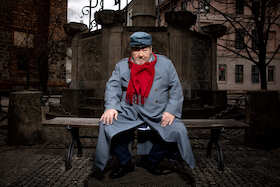
Ludwig Thoma
„Jetzt, Leuteln, jetzt loost's amal zua! ... Kimmt die heilige Nacht. Und da Wald is aufgwacht, Schaugn de Has'n und Reh, Schaugn de Hirsch übern Schnee. Hamm sie neamad net gfragt, Hot's eahr neamad net gsagt, Und kennan s' do bald, D' Muatta Gottes im Wald.
Ludwig Thoma wurde als fünftes Kind eines Försters in Oberammergau geboren. Eines seiner populärsten Werke, die Lausbubengeschichten, erinnern zweifelsohne an die nicht immer einfachen und sicher auch nicht immer so lustigen Jahre seiner
Kindheit.
Thoma wollte - wie sein Vater - Förster werden und begann ein Studium der Forstwissenschaft in Aschaffenburg, brach es jedoch nach dem ersten Jahr ab und wechselte zur Rechtswissenschaft über, die er in München und Erlangen studierte. Von 1890 bis 1893 war er Rechtspraktikant in Traunstein. 1894 starb seine Mutter, im gleichen Jahr ließ er sich als Rechtsanwalt in Dachau nieder. Hier lernte er „seine Bauern“ kennen, die er in der Folgezeit so treffend beschrieb. 1897 zog er um nach München, wo er mit den Mitarbeitern der 1896 von Albert Langen gegründeten satirischen Wochenschrift Simplizissimus in Kontakt kam. Es folgten erste
Veröffentlichungen in dieser Zeitschrift unter dem Pseudonym „Peter Schlemihl“. 1899 gab er seine Tätigkeit als Rechtsanwalt auf und wurde fester Mitarbeiter des Simplizissimus, ein Jahr später dessen Chefredakteur. In den nächsten Jahren folgten Reisen durch Europa und eine rege schriftstellerische Tätigkeit. So verfasste er unter anderem die Theaterstücke „Die Medaille“ und „Die Lokalbahn“. 1905 heiratete er die 25-jährige auf den Philippinen geborene Tänzerin Marietta di Rigardo, genannt Marion, eine für damalige Zeiten emanzipierte junge Frau. Die Ehe hielt nicht lange, zu verschieden waren die Temperamente der beiden,
Marion langweilte sich zusehends, sie unternahm Seitensprünge. 1910 wurde die Ehe geschieden, die beiden blieben aber befreundet.
1906 wurde Thoma zusammen mit Hermann Hesse Herausgeber der Zeitschrift „März“. Im gleichen Jahr wurde er wegen eines im „Simplizissimus“ veröffentlichten Gedichtes wegen „Beleidigung einiger Mitglieder eines Sittlichkeitsvereines“ zu sechs Wochen Haft verurteilt, die er in Stadelheim bei München absitzen musste. 1908 hatte einer seiner größten Erfolge, das Lustspiel „Moral“, Premiere. Hier ließ er einen Vertreter eines Sittlichkeitsvereins, der eine schlimme Verfehlung gegen die Grundsätze eines solchen Vereines begangen hatte, sagen: „Moralisch sein, das bringe ich in meinem Zimmer allein fertig, aber das hat keinen erzieherischen Wert. Die Hauptsache ist, dass man sich öffentlich zu moralischen Grundsätzen bekennt. Das wirkt günstig auf die Familie, auf den Staat“.
1908 bezog er sein Haus „Auf der Tuften“ in Tegernsee.
Ludwig Thoma fand in Rottach-Egern am Tegernsee seine letzte Ruhe. Seine Grabstätte liegt neben der seines langjährigen Freundes, des Schriftstellers Ludwig Ganghofer.
Dreigsang:
Geschwister Siferlinger -
Traudi, Maria und Herrmann Siferlinger
Schon als Kinder und Jugendliche sind die Geschwister Siferlinger bei vielen hochkarätigern Volksmusikveranstaltungen aufgetreten. So haben Maria, Traudi und Hermann immer wieder auch Lesungen der „Heiligen Nacht“ mit Größen wie Fritz Straßner, Karl Obermeier oder Gustl Bayrhammer mit ihrem Gesang begleitet. Auch jetzt, wo sie nach vielen Jahren zum ersten Mal wieder öffentlich miteinander auftreten, begeistern sie das Publikum mit ihren unverkünstelt-authentischen, fein
aufeinander abgestimmten Geschwisterstimmen und geben damit den passenden musikalischen Rahmen zu Ludwig Thomas berührenden Texten.
Traudi Siferlinger, die gebürtige Chiemgauerin stammt aus einer Volksmusikfamilie, besuchte in Rosenheim das musische Ignaz Günther Gymnasium, studierte in München am Richard Strauss Konservatorium Violine und Musikpädagogik und absolvierte in Dresden an der Carl Maria von Weber Hochschule ein Aufbaustudium.
Seit vielen Jahren ist sie für den Bayerischen Rundfunk tätig, zunächst als Radiomoderatorin, später als Autorin von Magazinsendungen und Feature-Filmen. Seit 2005 ist sie die musikalische Gestalterin der Sendung "Wirtshausmusikanten beim Hirzinger", die sie seit 2006 zusammen mit einem Co-Moderator (bis 2017 Wolfgang Binder, seit 2017 Dominik Glöbl) auch moderiert. Mit dieser Sendung, deren Beliebtheit weit über Bayern hinaus geht, erreicht sie ein Millionenpublikum.
Matthias Pürner – (Ziach)
Matthias Pürner, geboren 1990 in Trostberg im nördlichen Chiemgau, studiert im Bachelorstudiengang Volksmusik mit Hauptfach Steirische Harmonika (Klasse Alexander Maurer) an der Hochschule für Musik und Theater in München.
Neben traditioneller alpenländischer Volksmusik liegt sein Fokus auf der Erkundung unterschiedlichster Genres von Klassik über Jazz bis hin zu Popmusik. Mit Effektgeräten und Loops werden die Möglichkeiten des Instruments erweitert, um mit neuen Klängen und Spieltechniken zu experimentieren.
Mit seiner Band Großstadt Boazn bespielt er Festivals, Keinkunstbühnen und Wirtshäuser von Verona bis Berlin.
Neben Volksmusikstücken im traditionellen Stil und vielfältigen Kompositionen für die
Großstadt Boazn zählen auch Auftragskompositionen für Theater und Fernsehen zu seinen Werken.
Einlass: 19:00 Uhr

 Hallo, ich bin Maya.