Über den Wipfeln II
Ein musikalischer Familienausflug zum Baumkronenpfad
Hainich für Kinder ab 6 Jahren.
Bitte bringen Sie wetterfeste Kleidung und festes
Schuhwerk mit!
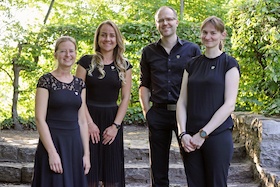
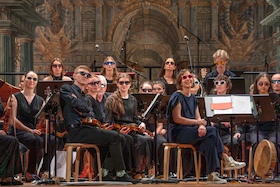
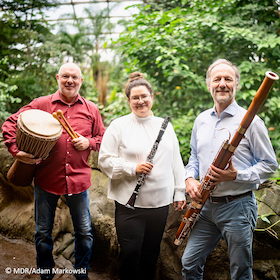
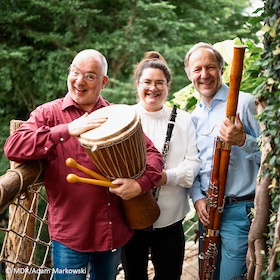
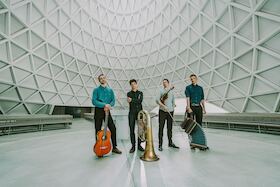
Mitglieder des MDR-Sinfonieorchesters
Musik auf Augenhöhe mit den Wipfeln: Beim einzigartigen Wandelkonzert auf dem Baumkronenpfad im Hainich verschmelzen Natur und Klang zu einem magischen Gesamterlebnis. Während man zwischen alten Buchen in 40 Metern Höhe schwebt, begegnen an jeder Biegung neue musikalische Überraschungen – mal zart und filigran wie ein Vogelruf, mal kraftvoll wie der Wald selbst. Ein Erlebnis, das die Sinne öffnet und den UNESCO-Weltnaturerbe-Nationalpark Hainich in einem völlig neuen Licht erscheinen und erklingen lässt.
Musik auf Augenhöhe mit den Wipfeln: Beim einzigartigen Wandelkonzert auf dem Baumkronenpfad im Hainich verschmelzen Natur und Klang zu einem magischen Gesamterlebnis. Während man zwischen alten Buchen in 40 Metern Höhe schwebt, begegnen an jeder Biegung neue musikalische Überraschungen – mal zart und filigran wie ein Vogelruf, mal kraftvoll wie der Wald selbst. Ein Erlebnis, das die Sinne öffnet und den UNESCO-Weltnaturerbe-Nationalpark Hainich in einem völlig neuen Licht erscheinen und erklingen lässt.
Musik auf Augenhöhe mit den Wipfeln: Beim einzigartigen Wandelkonzert auf dem Baumkronenpfad im Hainich verschmelzen Natur und Klang zu einem magischen Gesamterlebnis. Während man zwischen alten Buchen in 40 Metern Höhe schwebt, begegnen an jeder Biegung neue musikalische Überraschungen – mal zart und filigran wie ein Vogelruf, mal kraftvoll wie der Wald selbst. Ein Erlebnis, das die Sinne öffnet und den UNESCO-Weltnaturerbe-Nationalpark Hainich in einem völlig neuen Licht erscheinen und erklingen lässt.
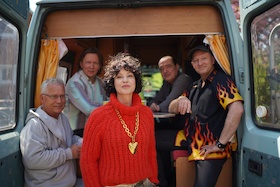
Meet & Greet mit Jennifer Kruspe, Försterin im Nationalpark Hainich, und Filmteam
Wie rettet man einen sterbenden Wald? Diese Frage stellt sich die junge Försterin Jennifer Kruspe in ihrer täglichen Arbeit. Über fünf Jahre hinweg wurde sie von einem Filmteam begleitet. Der Dokumentarfilm „Mein Wald – Fünf Jahre zwischen Mythos und Holz“ erzählt von Jennifers Versuch, die Hörselberge im Thüringer Wald fit gegen Trockenheit, Brände und Schädlinge, um den Wald klimaresistent zu machen. Der Film beleuchtet auch die Konflikte zwischen Gemeinden, Pächtern und Jägern.
Treffen Sie beim MDR-Musiksommer-Stopp „Über den Wipfeln“ im Baumkronenpfad Hainich Försterin Jennifer Kruspe, die heute als Rangerin im Nationalpark arbeitet, sowie das Filmteam und die Redaktion des Dokumentarfilms. Vom Meet & Greet über einen Fotopoint bis zum Dokumentarfilm ist alles live zu erleben am Forsthaus Thiemburg, direkt neben dem Eingang zum Baumkronenpfad Hainich.
Einlass: 1 Stunde vor Konzertbeginn
Diese Veranstaltug ist ausverkauft!

 Hallo, ich bin Maya.