Chapeau Classique: Ensemble Odyssee - Venedigs Glanz am Dresdner Hof
Courtly splendor, shimmering colors: like Dresden and Venice themselves, the music of these cultural capitals shines in the 18th century. The Saxon royal seat and the Republic of Venice were linked by an intense artistic exchange.
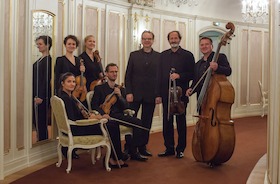
Today, the style transfer of that era inspires the renowned Baroque ensemble Odyssee from Amsterdam to immerse itself in the seductive mélange of German compositional craft, expressive melody, and Italian “sprezzatura”—the supreme art of making the difficult seem effortless, as if improvised.
“Venedigs Glanz am Dresdner Hof” follows in the footsteps of those musicians in the retinue of Augustus the Strong who traveled to “La Serenissima” in 1716–1717, became acquainted with the spirited Venetian style, especially Vivaldi’s, and its instrumental brilliance, and opened the Dresden court’s musical life to it.
Thus Pisendel, the most important German violinist of the late Baroque, who became concertmaster of the Dresden court orchestra under Hasse, became a friend of Vivaldi’s in Venice. He brought to Saxony, where Vivaldi never went, among other works, Vivaldi’s energetic yet lyrical Trio Sonata in G minor. Pisendel’s moving solo sonata for violin can be heard as an Italian-inspired engagement with J. S. Bach’s “Sei solo.”
Hasse, admired in Italy as “il divino Sasse,” the divine Saxon, was the great opera composer of the Dresden court. His “Cantata per Flauto” also lets the recorder sing virtuously. In his Trio Sonata, Handel (in Italy from 1706 to 1710) combines drama, elegance, and counterpoint. In a festive work, Fasch, like Handel connected to the Dresden court from afar, blends French nobility with Italian vivacity, while Heinichen, court music director in Dresden, gives his oboe sonata the utmost expressive power through Italian melody and German polyphony.
Janitsch, a member of the Berlin court orchestra, represents the galant style of the 1730s and 1740s. His chamber sonata is light, transparent, and courtly in its polish, and exudes optimistic energy, much like the quartet by Fortunato Riedel, who is little known today.
PROGRAM:
Venedigs Glanz am Dresdner Hof
Johann Friedrich Fasch (1688–1758):
Sonata in B-flat major, for recorder, oboe, violin, and basso continuo, FaWV N:B1
Georg Friedrich Handel (1685–1759):
Trio Sonata in C minor, for recorder, violin, and B. c., HWV 386a, op. 2
Johann David Heinichen (1683–1729):
Sonata in G minor, for oboe and B. c. (manuscript)
Johann Gottlieb Janitsch (1708–1762):
Sonata de camera in F major, for recorder, oboe, violin, and basso continuo, op. 6
Antonio Vivaldi (1678–1741): Trio Sonata in G minor, for oboe, violin, and B. c., RV 81
Johann Adolph Hasse (1699–1783):
Cantata per Flauto in C major, for recorder and B. c. (manuscript, ca. 1728–1733)
Johann Georg Pisendel (1687–1755):
Sonata for solo violin
Fortunato Riedel (ca. 1700): Quartet in F major, for recorder, oboe, violin, and B. c.
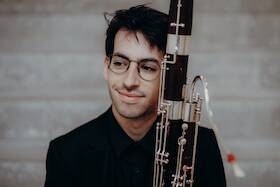
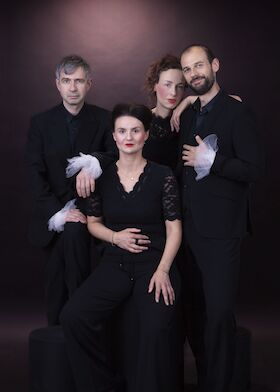
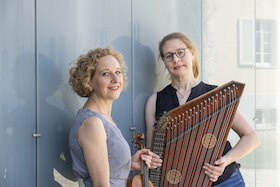
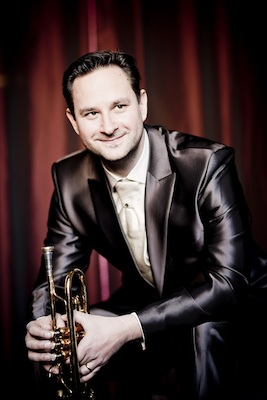
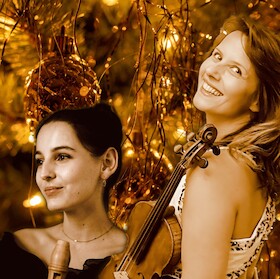
Anna Stegmann recorder Georg Fritz oboe Eva Saladin violin Andrea Friggi harpsichord
The concert is sold out; waiting list: 0251 591 3041

 Hallo, ich bin Maya.