Weber & Dogs - Beziehung, Sex, Respekt & Intimität
Where have they gone, the butterflies in your stomach? What if the big feelings have long since flown away and closeness has become routine? Love sometimes looks different in midlife than we planned. Sex, perhaps, too. And respect? That should remain—even when our longings go unfulfilled.
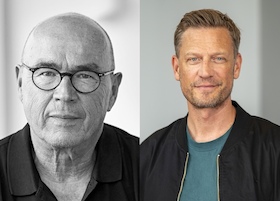
At Stuttgart’s Renitenztheater, Florian Weber and “his psychiatrist,” Christian Peter Dogs, take a close look at relationships. Without rose-colored glasses, but with nothing held back. It’s about intimacy and silence, fidelity and infidelity, honesty, guilt, and the uncomfortable question: What do we actually still want from each other? What keeps us together, and what drives us apart? And how much of it is in our own hands?
An evening for everyone who loves, is loved, doubts, desires—and for anyone wondering how to find a balance on the fine line between individuality and togetherness.
The topics change in every live show, so no two shows are alike—each session is a new game with its own unpredictable dynamic!
Florian Weber is a television presenter and podcast host, born in 1976. He is “in the middle of life,” married, and the father of three children. For nearly two decades, he has hosted numerous programs for SWR/ARD, including the quiz show “Meister des Alltags,” “Die Landesschau Baden-Württemberg,” and the political talk show “Zur Sache Baden-Württemberg.”
He commutes between Stuttgart and his family, with whom he lives in the Chiemgau region. More and more often, life’s big questions land at his feet, and he finds himself facing the same challenges his generation has to navigate in relationships, work, family, and friendships.
On stage, in a “therapy session” with psychiatrist Dr. Christian Peter Dogs, authentic, deeply personal conversations unfold—provocative, honest, and unconventional.
Dr. Christian Peter Dogs is a physician, psychiatrist, and psychotherapist. The 72-year-old established three psychosomatic clinics and led them to success. His approach: patients should be free to choose their therapist, because “the chemistry has to be right” between therapist and patient. He currently still practices at his private clinic in Lindau on Lake Constance.
Dogs uses unconventional methods that lead to results more quickly. He brings his own story into the process and doesn’t just listen—he provokes and challenges patients with an antithesis to encourage them to reflect. The “rebel of psychotherapy” questions many established methods of psychoanalysis and psychotherapy.
His book “Feelings Are Not an Illness: Why We Need Them and How They Make Us Content” appeared on the SPIEGEL bestseller list. What Dogs has to say about today’s mental health industry, how he overcame the severe childhood trauma he experienced, and how he helps us become more self-determined emerges in conversation with Florian Weber.
Doors open: 7:45 p.m.

 Hallo, ich bin Maya.