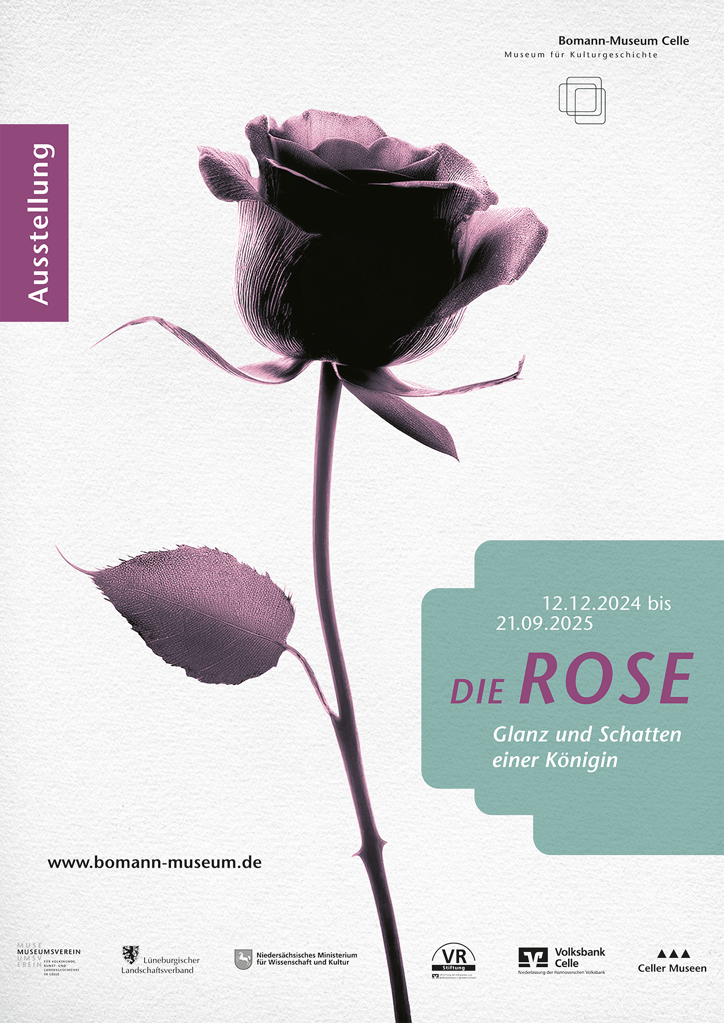
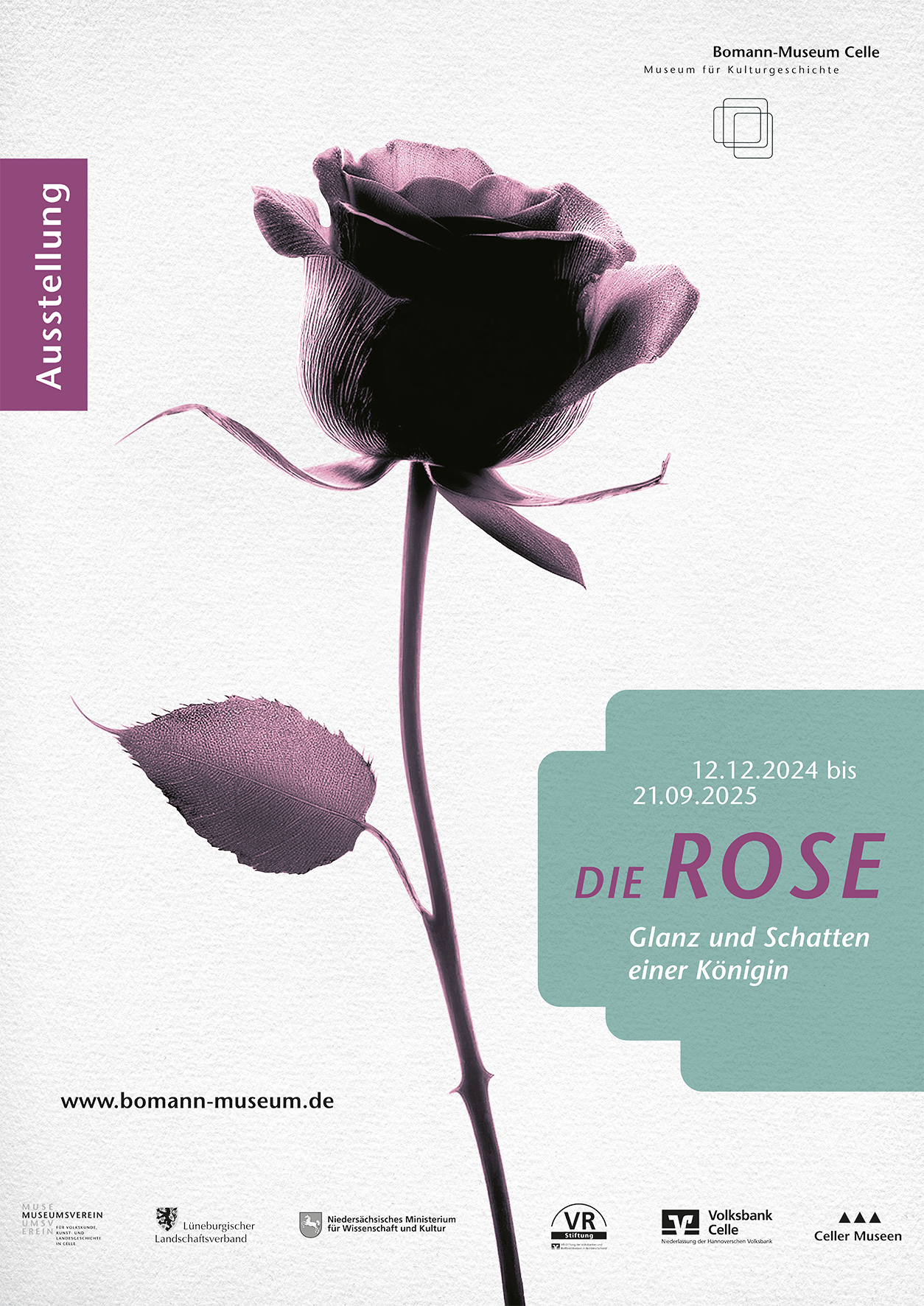
Die Ausstellung zeigt die facettenreiche Kulturgeschichte der Rose und stellt sie zugleich in einen größeren ökologischen und ökonomischen Kontext.
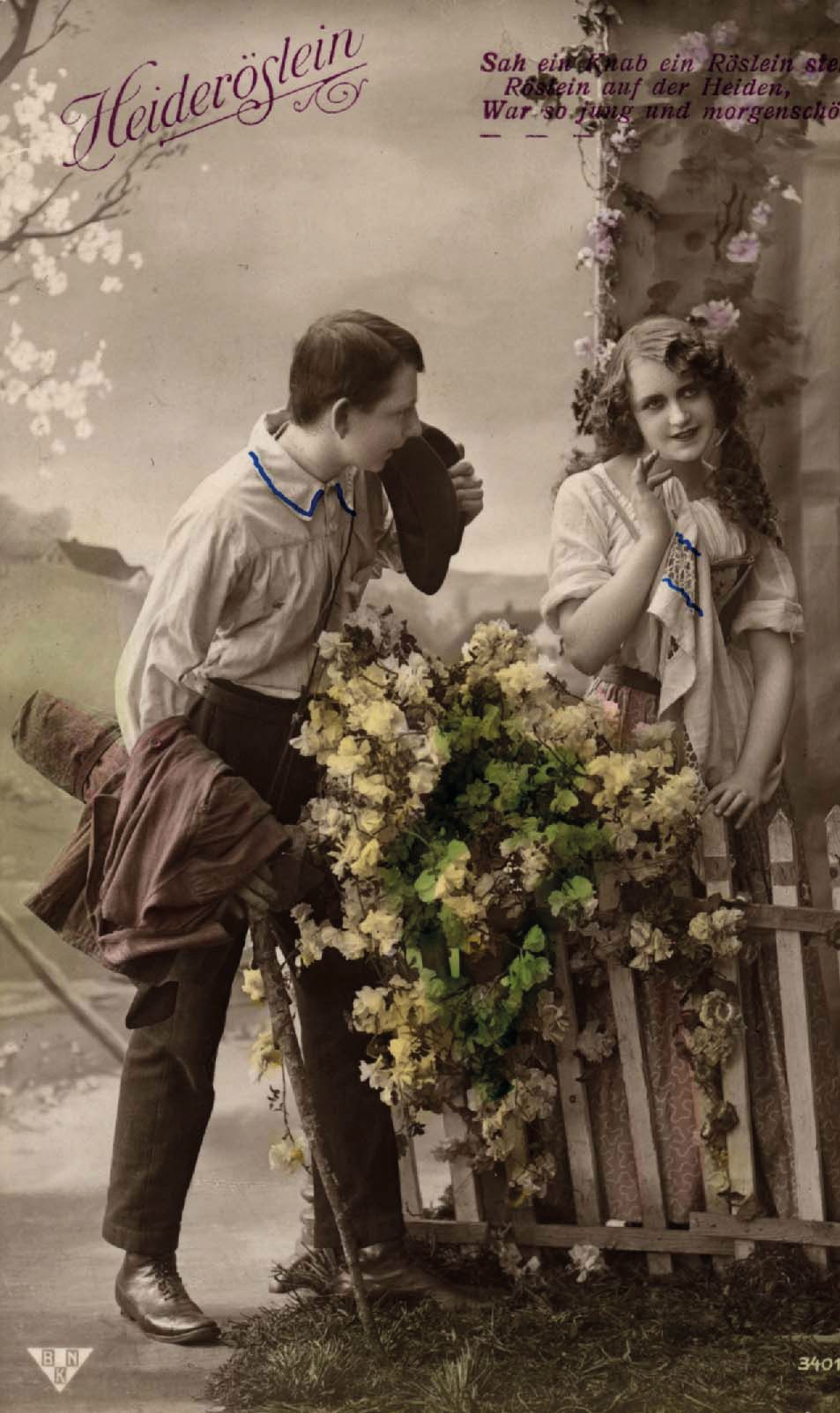
Die Rose besticht mit ihrer Blütenpracht, ihrer Sortenvielfalt und ihrem Duft. Sie fasziniert die Menschen seit Jahrhunderten. Es gibt kaum eine Blume, die eine größere Symbolkraft besitzt, sei es in der Liebe, der Mythologie, der Politik oder Religion. Sie inspirierte Generationen von Künstlern, Musikern, Dichtern und Denkern. Frauen wurden mit erblühenden Rosen gleichgesetzt, zum Beispiel in Goethes „Heideröslein“ – heute angesichts der „Me too-Debatte“ auch kritisch zu lesen. Die Ausstellung beschäftigt sich mit den dahinterstehenden Frauenbildern, die bis in die Gegenwart unser Denken und unsere Sprache beeinflussen.
Aktuell erregen Blumen als unverzichtbarer Teil des Ökosystems große Aufmerksamkeit. Als besonders schöne Blühpflanzen können Rosen für die drängenden Probleme der Gegenwart wie Artenvielfalt und -erhalt und damit für die Klimaproblematik sensibilisieren. Die Ausstellung zeigt auch, wie die Rosenbestandteile zu Rosenwasser und Rosenöl verarbeitet und in Kosmetik, Nahrung und Medizin verwandt werden. Außerdem sind 42 Prozent der verkauften Schnittblumen Rosen. Die Ausstellung beleuchtet die Problematik von Anbau und Handel.
Geplant ist außerdem, die Innenhöfe des Museums über einen Blumenpfad in die Ausstellung miteinzubeziehen. Die Verbindung von Innen- und Außenbereich mit Duftstationen und Mitmachgelegenheiten einerseits und einer duftenden Bepflanzung der Höfe andererseits spricht die Sinne auf eine besonders intensive Weise an.
Gefördert vom MWK und Lüneburgischen Landschaftsverband, von der VR-Stiftung der Volksbanken und Raiffeisenbanken in Norddeutschland, der Volksbank Celle, Niederlassung der Hannoverschen Volksbank und vom Museumsverein in Celle e.V.
Di - So 11.00-17.00 Uhr

 Hallo, ich bin Maya.