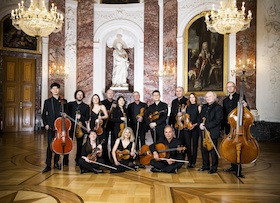
Amsterdam Sinfonietta
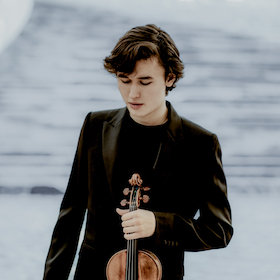
Sein Spiel habe „federleichten Tiefgang“, „klar und kristallin“, dabei sei es von „überirdischer Schönheit“, voller „Emotion und Poesie“, und es kenne „keine technischen Schwierigkeiten“. So lauten Superlative der internationalen Presse, die sein künstlerisches Profil zu umreißen suchen. Die Süddeutsche Zeitung brachte es auf den Punkt, als sie den Musiker mit einem einzigen Wort beschrieb: „Wundergeiger“. Gemeint ist Daniel Lozakovich. Bereits im Alter von acht Jahren gab er mit den Moskauer Virtuosen und Vladimir Spivakov sein Debüt als Solist. Inzwischen ist er Mitte 20, musiziert mit vielen internationalen Spitzenorchestern an der Seite von großen Stardirigenten und macht Kammermusik mit anderen Solosuperstars der Klassikwelt. Sein Debüt beim gVe gibt Daniel Lozakovich im März 2027 mit der Amsterdam Sinfonietta, die in der vergangenen Saison bereits mit einem anderen tollen Geiger als Solisten Erlangen begeisterte – mit Ray Chen, dem „artist of reference“ des gVe 2025/26.
Daniel Lozakovichs Vater stammt aus Weißrussland, seine Mutter aus Kirgisien. Aus den beiden ehemaligen Sowjetrepubliken emigrierte das Ehepaar nach Schweden. Dort, in Stockholm, kam Daniel 2001 zur Welt – er ist ein schwedischer Staatsbürger weißrussisch-kirgisischer Herkunft. Und auch als Geiger steht er in der russischen Tradition: Der russische Dirigent und Geiger Vladimir Spivakov war sein großer Mentor, an der Karlsruher Musikhochschule studierte er bei dem lettischen Geiger Josef Rissin, der seinerseits am Moskauer Tschaikowsky-Konservatorium studierte, und in Genf war Daniel Lozakovich Schüler des ebenfalls aus Lettland stammenden Geigers und Instrumentenhändlers Eduard Wulfson, der sowohl das Moskauer als auch das Leningrader Konservatorium besuchte. In Russland war es schließlich auch, wo Daniel Lozakovich erstmals weltweit für internationale Schlagzeilen sorgte: Der Sieg beim Vladimir-Spivakov-Wettbewerb in Ufa im Jahr 2016 brachte den internationalen Durchbruch des Geigers.
Noch im selben Jahr – kurz nach seinem 15. Geburtstag – unterzeichnete er einen achtjährigen Exklusivvertrag mit der Deutschen Grammophon Gesellschaft, dem traditionsreichen Plattenlabel mit dem Gelbetikett, das als „der feinste Laden“ der Branche gilt. Für sein Debütalbum wählte Daniel Lozakovich eine ambitionierte Zusammenstellung – ein reines Bach-Programm: Die Violinkonzerte in a-Moll und E-Dur mit dem Kammerorchester des Symphonieorchesters des Bayerischen Rundfunks und die d-Moll-Partita für Violine solo, die mit der berühmten Chaconne endet – dem größten und längsten Werk für Solovioline seiner Zeit und nach wie vor eines der schwierigsten und anspruchsvollsten Stücke der gesamten Violinliteratur. „Ich liebe das Risiko“, sagt Daniel Lozakovich. „Bach war die perfekte Wahl und das perfekte Risiko.“
Apropos Lust am Risiko: Jenseits der Musik hat der Geiger Interessen, die man nicht sogleich mit einem schöngeistigen Musiker verbindet: Er geht gern in Museen, liebt Malerei, liest Gedichte und spielt Schach. Doch im Sport hatte er als Teenager neben Tennis und Fußball eine Vorliebe, an die man wohl zuallerletzt bei einem Geiger von so zarter, knabenhafter Statur denkt: „Ich betreibe Boxsport“, gestand Daniel Lozakovich in einem Interview im Jahr 2018. „Das ist gar nicht so gefährlich für die Hände – die sind gut verpackt in dicken Boxhandschuhen. Es ist auch nicht die Kraft, die zählt, sondern die schnelle Bewegung mit den Händen, die geschickte Arbeit mit den Füßen. Das Boxen trainiert vor allem die Reaktionen. Meinen Hang dazu habe ich von Vladimir Spivakov, der den Sport schon als Jugendlicher liebte und Kontakte zu Profiboxern pflegte.“
Neben Spivakovs Moskauer Virtuosen und dem Kammerorchester des Symphonieorchesters des Bayerischen Rundfunks gehört zu Daniel Lozakovichs bevorzugten Kammerorchesterpartnern die Amsterdam Sinfonietta. Viele gemeinsame Auftritte haben sie bereits absolviert und waren dabei auch schon in unserer fränkischen Region zu erleben: Beim Mozartfest Würzburg 2022 spielte der Geiger mit dem niederländischen Elite-Ensemble Mozarts A-Dur-Violinkonzert KV 219. Auch beim Gastspiel im März 2027 steht ein Werk des Wiener Klassikers aus Salzburg auf dem Programm: die Sinfonia concertante in Es-Dur für Violine, Viola und Orchester, die ein funkelndes Juwel ihrer Gattung darstellt – in ihrer musikalischen Schönheit und Sinnfülle, in ihrer Tiefgründigkeit wie in ihrer hochgestimmten Spielfreude. Wobei die Soloparts virtuose Ansprüche stellen, die selbst jene in Mozarts Violinkonzerten übersteigen. Daniel Lozakovich wird flankiert von der britischen Primaria der Amsterdam Sinfonietta Candida Thompson, die nicht nur eine fantastische Geigerin, sondern auch eine exzellente Bratschistin ist.
Das Erlanger Programm präsentiert einen bunten Mix von Musik aus Klassik, Spätromantik und Postmoderne – das Ganze im Zeichen Mozarts, denn neben der Sinfonia concertante des Meisters sind auch zwei auskomponierte Verbeugungen vor ihm mit dabei: zum einen Tschaikowskys beliebte Streicherserenade, über die der Komponist selbst sagte, sie dürfe „als Tribut meiner Verehrung für Mozart angesehen werden“, zum anderen das humorvoll-geistreiche Kabinettstück „5 Minuten aus dem Leben von W. A. Mozart“ für Solovioline, Streicher und Schlagzeug, das der russische Komponist Alexander Raskatov 2001 für Gidon Kremer schrieb. Einen Akzent von baltischer Mystik und Melancholie setzt ein 2021 für die Kremerata Baltica entstandenes Werk der litauischen Gegenwartskomponistin Raminta Šerkšnytė: „… this too shall pass …“ für Violine, Violoncello, Vibraphon und Streichorchester – musikalische Reflexionen über die Vergänglichkeit aller Dinge und die Kürze des Lebens. Die Solisten sind Daniel Lozakovich und Tim Posner, der englische Solocellist der Amsterdam Sinfonietta.
Text: Klaus Meyer

 Hallo, ich bin Maya.