la festa musicale - WahnsinnsMusik
From the very beginning, off the rails: The program starts with Antonio Vivaldi's Concerto in G minor RV 157, a short concerto for string orchestra that breaks the bounds in the two frame movements. The wild cascades of the high strings in the first and the turbulent, never-ending bass runs of the third movement dramatically introduce the motto of the evening.
The first main work of the evening is Georg Friedrich Händel's secular cantata "Il delirio amoroso" HWV 99 for soprano and orchestra. The librettist, Roman Cardinal Benedetto Pamphili, depicts the despair of the shepherdess Clori, whose efforts for her unhappy and now deceased love Tirsi are not even crowned by success with a trip to the underworld. It is literally maddening. These existential troubles are felt by the young Händel in his energetically overflowing music. Composed at the beginning of his stay in Rome in 1707, this musical fervor opened doors and paved the way for his career. The renowned soprano Magdalene Harer, known in the Baroque music scene, is an ideal casting for the challenging and varied role of Clori with her expressive and agile voice. The playful orchestral part of the cantata is just right for la festa musicale, which looks forward to energy-filled orchestral movements and expressive solos from oboe, violin, recorder, and cello.
Giuseppe Valentini is considered a fierce rival of Arcangelo Corelli. His Concerto op. 7 No. 11 is a work that breaks all conventional frameworks, where instead of the usual solo trio of two violins and cello, four violins, a viola, and a cello seek to outdo each other. Together with the Basso Continuo, they alternately form the Tutti, before whose passepartout the respective solo escapades find their extravagant space.
The program is rounded off and pushed to the peak (if not into madness) with a Follia arrangement by the ensemble's resident arranger and cellist, Christoph Harer. The extremely popular harmony scheme "La Follia" in the Baroque era, which exists in numerous versions by significant Baroque composers (such as Vivaldi, Corelli, Geminiani, among others), is named after the originally Portuguese "folia" ("noisy merriment," "frivolous exuberance") or the Italian "follia" ("madness," "folly," "insanity"). Thus, Follia arrangements have always been extravagant compositions that push the limits of playability, filled with extreme emotional contrasts. This principle is also followed in the world premiere version here, which is specifically composed for the evening's ensemble and breaks the Baroque shackles. Freedom arises through madness, insane freedom... and a lot of fun for both musicians and listeners.
The singing part is taken over by the internationally renowned soprano Magdalene Harer. The program will be entertainingly moderated by members of the ensemble.
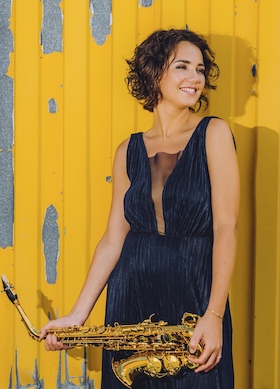
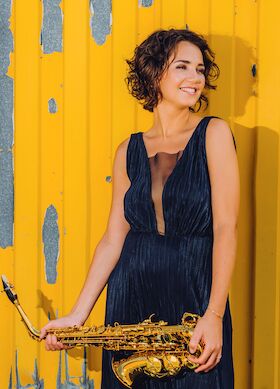
Photo: la festa musicale (C) Nils Ole Peters
Doors open: 7 PM

 Hallo, ich bin Maya.